Lasagna, Lasagne
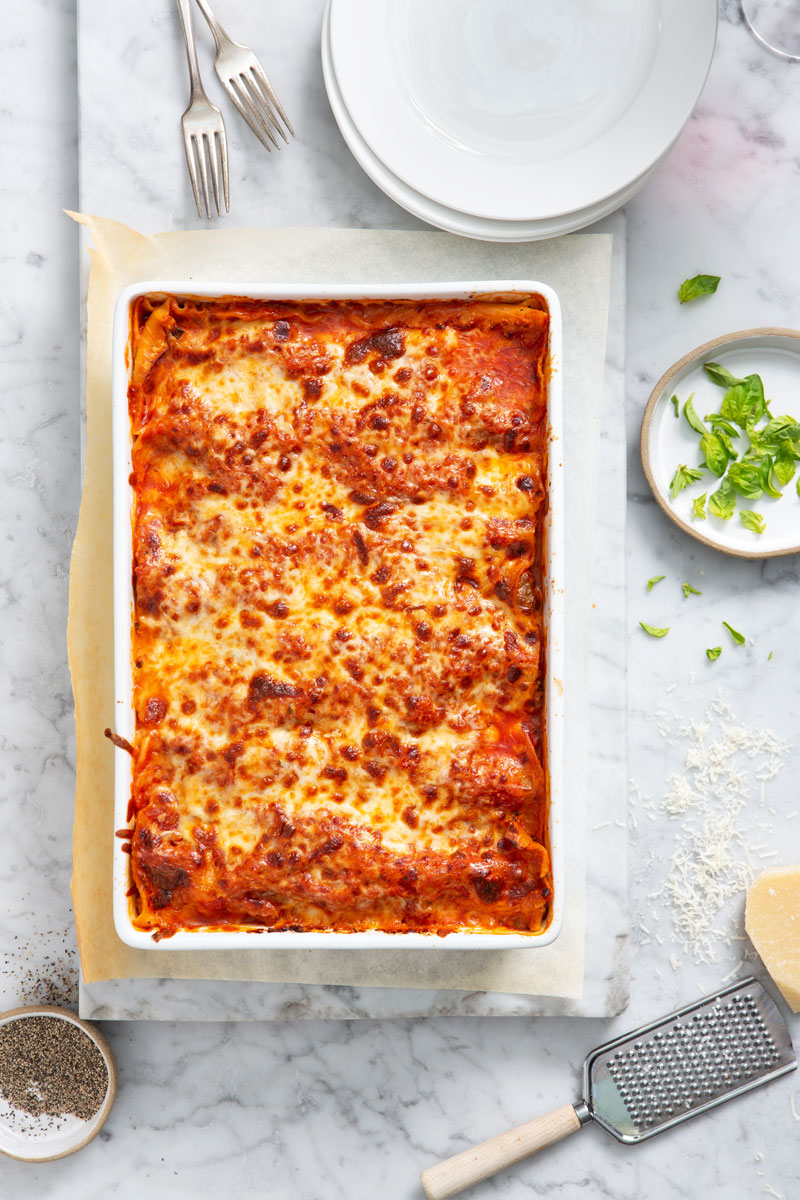
While some layer their lasagna with curly noodles, hearty Bolognese sauce and creamy béchamel, others find a simple marinara, mozzarella and spinach complimentary to the ocassion. Whether you add fish or enjoy roasted squash, there is a lasagna for you. Piergiorgio talks lasagna.

Lasagne calde!!
written by: Piergiorgio and Amy Nicoletti
Lasagne calde, calde le lasagne, caldeee!!! Forty years ago, you could always hear those words—which mean “hot lasagna, hooooot lasagna”—bellowed from the busy platform of the Bologna railway station as the train pulled in. Though lasagne vendors are no longer seen (or heard) today, Lasagne alla Bolognese remains the most famous version—in Italy and throughout Europe—of this beloved dish of Bolognese cuisine. There are countless regional variations of lasagne—in Italian, the plural form, with an “e” at the end, is always as used—exemplifying how a traditional dish transforms and evolves over time. Though ingredients vary according to place and local custom, as you’ll see in the descriptions and recipes that follow, the unique form and character of lasagne remain the same: layers of noodles, flat or curly, separated by layers of exquisitely prepared sauces, meat, fish, or vegetables—all building up into one glorious baked edifice. The comfort and satisfaction a plate of hot lasagne provides makes it one of the most appreciated and commonly craved Italian dishes.

In my childhood, I was totally addicted to lasagne. At home, lasagne was served at Easter, Christmas Day, and birthdays—and since there were eight of us in my family, this greatly increased the odds. I did the arithmetic: once every five weeks or so, I could count on a truly delectable lasagne dinner. Few things in my childhood brought me more excitement than waking up on one of those ten mornings. Taking full advantage of my youngest brother’s malleable youth, I would shamelessly connive him into giving me part of his lasagna in exchange for my dessert. My mother’s lasagne were—and remain, of course—the very best I have ever had: classic lasagne alla bolognese, made with homemade or commercial spinach lasagne, ragù, béchamel and Parmigiano Reggiano. These lasagne differ quite a bit from the most popular versions in the US; this is because most of the Italians in the U.S. emigrated from southern Italy, where Lasagne alla Bolgnese were virtually unknown until just a few generations ago.
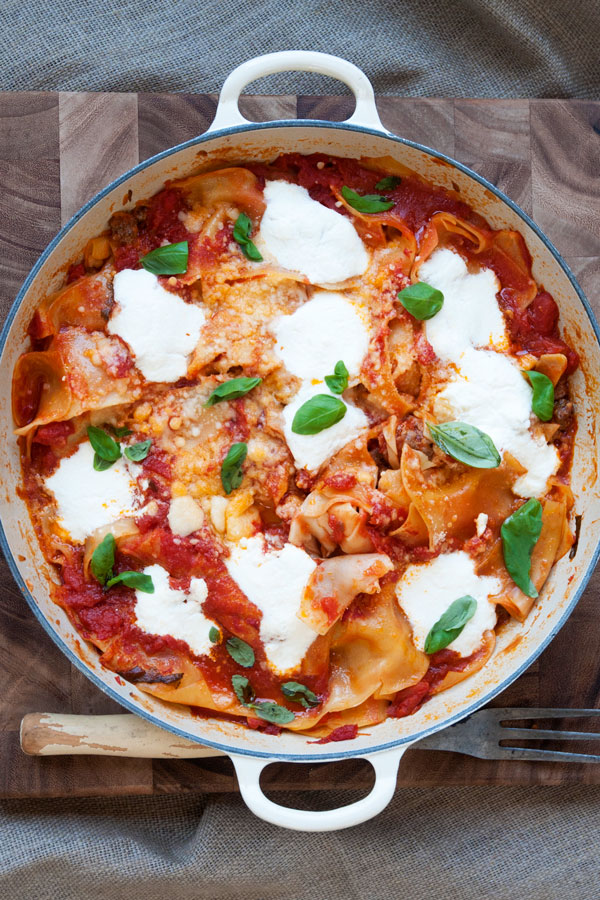
Lasagne al forno (baked lasagne)—often called simply lasagne, or sometimes pasticcio di lasagne—are traditionally from the Emilia-Romagna and the Marche regions. Outside of these two regions, there is a tremendous variety in the way lasagna is prepared; pasticcio—which literally means “mess” or “mixed up”—refers to the liberties allowed in the choice of ingredients. The traditional Lasagne alla Bolognese is made with spinach-and-egg lasagne, ragù alla Bolognese (that is, ground beef and veal, onions, carrots, celery, white wine, a few tomatoes, and some herbs and spices), besciamella (béchamel or Italian white sauce), and Parmigiano Reggiano or Grana Padano. Elsewhere, especially in central and southern Italy, the ingredients are greatly varied—from different vegetables to cooked ham and even boiled eggs. Recently mozzarella has become one of the most popular main ingredients, and often ricotta cheese replaces the béchamel sauce.
The way lasagne is prepared differs not only from region to region, but also from town to town, and family to family. The most commonly used sauce, il ragù di carne (“ragout” in French), is also prepared in so many different ways it’s impossible to list them all. The famous Neapolitan ragù is much richer in tomatoes and onions than the northern version, and uses chunks of meat or meat on the bone (such as ribs or pork chops); the bones are eliminated in the last stage of cooking. The addition of meat on the bones is certainly a great idea because it makes for a much more flavorful sauce. This version of ragù is also very popular in America, where the sauce became even richer with the addition of meatballs, braciole, sausages and pork chops. When this ragù is used for lasagna, the cooked meat is chopped very finely and then added back into the sauce.
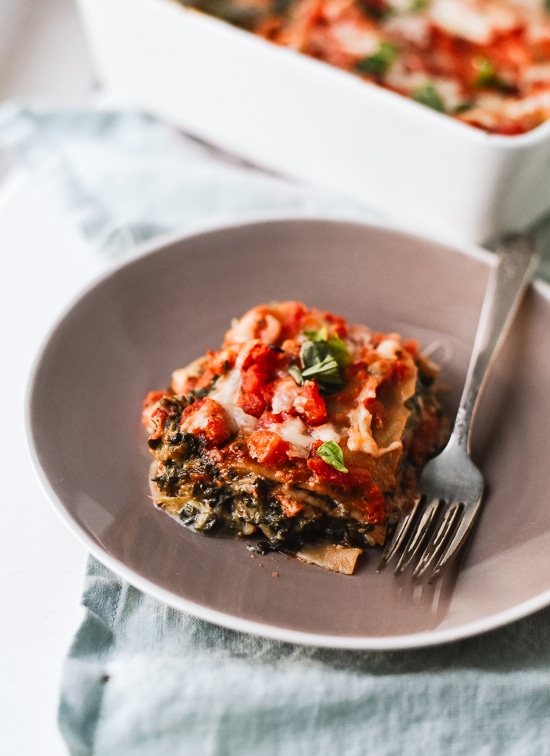
In central southern Italy, lasagne is sometimes prepared with a plain tomato sauce, ricotta and mozzarella cheese, and sometimes chopped spinach. In the Liguria region, in the northwest of Italy, lasagne al pesto (basil sauce) is a local specialty.
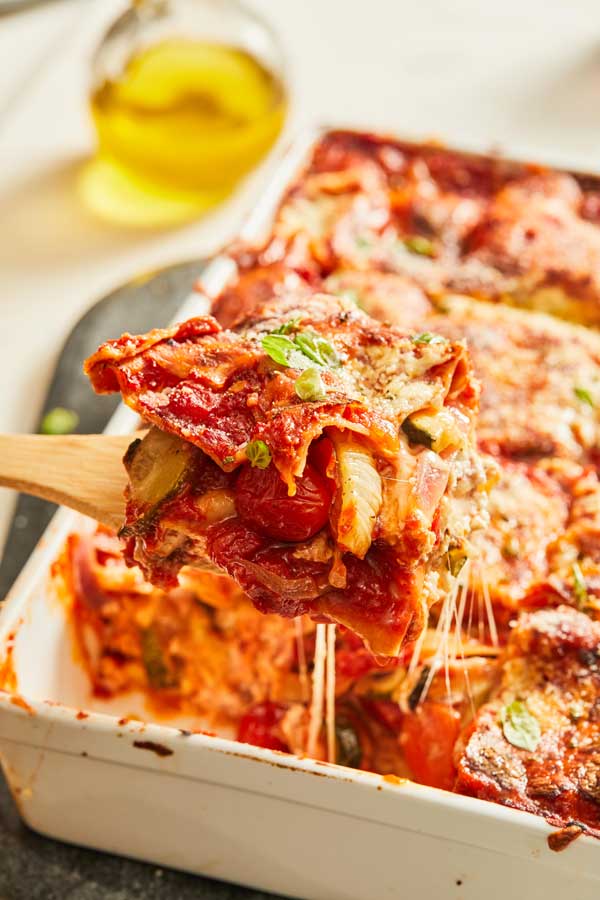
Two other noteworthy varieties are Lasagne con verdure, which is also called Lasagne alla vegetariana (both mean “vegetarian lasagna”) in which different vegetables are grilled or cooked separately—each in a different way to enhance their unique tastes: spinach, mushrooms, eggplants, leeks, peppers, zucchini, grilled radicchio, fresh tomato or tomato sauce are the most popular choices. The lasagne are then layered alternately with béchamel and parmigiano or other cheeses. (See recipe below.) Lasagne con pesce (fish lasagne) follows the same principle. However, in this recipe, the fish broth and juices that are released during the cooking process replace some of the milk in the béchamel sauce. This particular béchamel is closer to a fish veloutè—which is basically a roux (that is, flour and butter gently cooked) and a broth, in this case a fish broth. Fish lasagne can be seasoned with parmigiano or not, depending on taste. If you dare, you could actually attempt to use some grated mountain cheese such as Fontina, or even Taleggio, as an alternative to parmigiano. Most Italians are vehemently opposed to combining cheese with fish in pasta dishes, but fish lasagne is a good chance to go against the rules.
Lasagne … la pasta:
You can make your own homemade lasagna pasta (sometimes called “lasagna noodles”) with a dough made of flour and eggs, with or without spinach—or using just semolina (durum wheat flour) and water. But today, the ready-to-use lasagna noodles available in the grocery store are really excellent. When using regular store-bought lasagna noodles boil them in batches. To avoid the noodles sticking together, place them vertically on the sides of the pot of boiling water, and allow them to fall one on top of the other as they cook; stir gently and cook them very al dente. Remove them (using the proper utensils, such as tongs and a sieve) from the boiling water and bathe them for few seconds in a bowl of cold water; then lay them over a kitchen towel. Spinach lasagna noodles are perfect for lasagne alla Bolognese. White lasagna noodles, with or without eggs, are suitable for all other preparations. A few helpful tips: Remember to butter your baking pan before assembling your lasagna; and after your lasagna has finished baking, allow it to cool for at least five minutes before serving. Buttering the pan is probably unnecessary if you use a nonstick baking pan, but it never hurts.
Lasagna noodles are also available in an “oven ready” or “no boil” form. If you use this type, the sauce must be made much thinner or looser (that is, with more liquid), as the pasta will absorb a lot of moisture in the oven. A helpful tip if you use the “no boil” or “no-cook” variety is to prepare the lasagna a few hours before baking it and allow it to just sit. This way the pasta will have time to get tender, which improves the baking process. (By the way, oven-ready lasagna can also be boiled for three minutes or so—to enhance the texture—and then spread out on a kitchen towel.)
Italian imported bronze-cut lasagna made from organic semolina, as well as bronze-cut organic whole wheat lasagna are both available in most supermarkets nowadays. Bronze-cut pasta provides a rougher, more porous texture which absorbs sauce and seasoning better than most industrially produced pasta. Using bronze-cut noodles will give your lasagna a more authentic Italian taste.
See our traditional Lasagna Recipes here: